

For Amazon, The Rings of Power is not simply an extremely expensive fantasy production. The company is trying to turn a globally known cultural universe into a long-term business asset: a franchise that attracts subscribers, keeps them, strengthens Prime Video’s position, and can keep selling new stories for years. The real question behind the investment is not how much Middle-earth costs, but how long it can hold the audience’s attention.
When Amazon acquired the television adaptation rights to The Lord of the Rings in 2017, it was not simply buying the chance to make another fantasy series. It gained access to an exceptionally rare cultural asset: a story world whose characters, symbols and places have been part of global pop culture for decades. Tolkien’s universe does not rest on the success of a single novel or film series, but on a complete mythology with its own history, languages, peoples and political systems. That depth is what makes it so valuable to streaming platforms. A successful franchise does not sell a single season; it gives viewers an ongoing reason to come back.
Amazon’s investment is monumental accordingly. The rights cost around 250 million dollars, and industry estimates put the cost of the full production, originally planned for five seasons, at around one billion dollars. That is an extraordinary scale for television, but the logic of the investment cannot be measured against a conventional series budget. Amazon is not only expecting to recoup its production costs. The Rings of Power can be one of Prime Video’s flagships: content that brings in new subscribers, reduces churn and sets the platform apart from its competitors. In streaming, the most valuable content is not necessarily the show with the biggest one-off audience. What can matter far more is how long a series keeps a subscriber on the platform. If someone subscribes because of The Rings of Power and then watches other Amazon content until the next season, the value of the series no longer shows up only in its own viewing figures. It contributes to the subscriber’s lifetime value, the revenue the platform can earn from that user over the whole length of the relationship. This is one of the defining features of the franchise economy: alongside the direct revenue from the content, the customer relationship it sustains also creates value.
The third season arrived on November 11 and, with a major time jump, entered a new phase. The story picks up years after the events of the second season, in the middle of the war between the Elves and Sauron. The central conflict leads ever more directly to the forging of the One Ring. Dramatically, this is an important turn: the series is gradually moving toward the point in history that viewers already know from Peter Jackson’s films, while still portraying an era that has been explored far less. The time jump also gives new viewers a way in, while continuing to build the story arc for the existing audience. The timing matters from a business perspective too. The biggest danger for a franchise built over several seasons is that viewers lose interest, or drift to other platforms during the long breaks. The first two seasons of The Rings of Power divided audiences: many praised the visuals, but the pacing, the storytelling choices and the interpretation of Tolkien’s legacy drew regular criticism. The third season therefore has to continue the story and rebuild viewers’ trust at the same time. For the platform, this is not purely a creative question. If the audience does not come back, the business case for a production planned over several seasons breaks down as well.
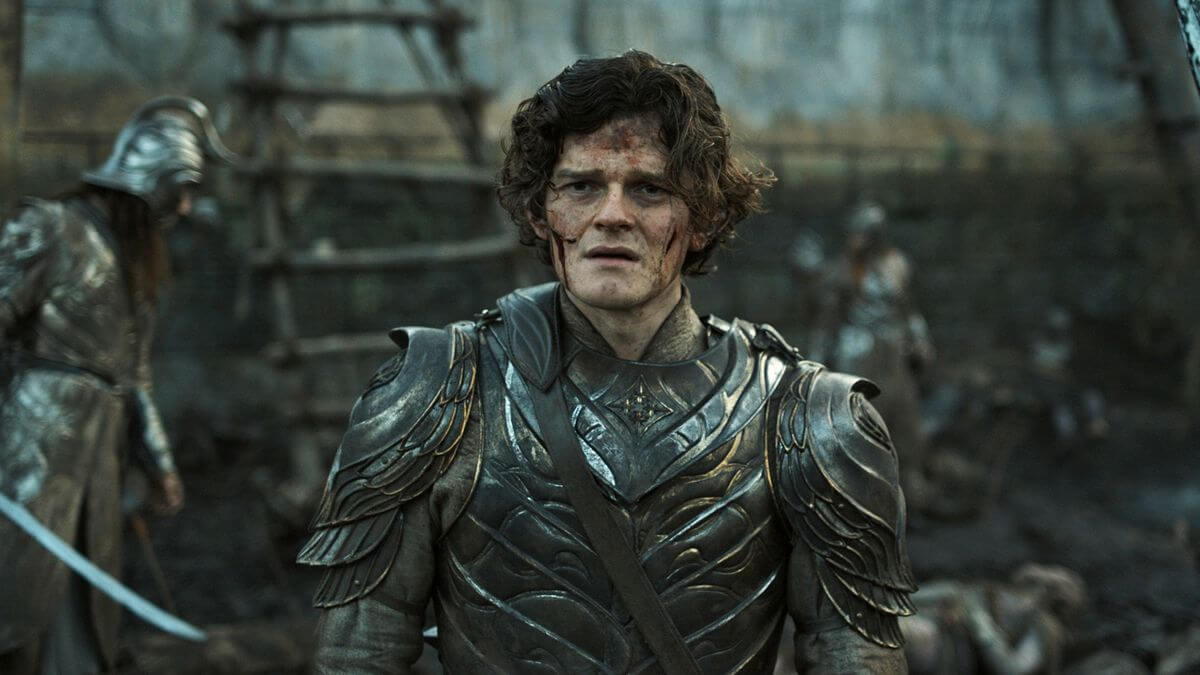
One of the series’ greatest competitive advantages is its visual world-building. Middle-earth is not a simple backdrop but an aesthetic system in its own right. The architecture, the costumes, the landscapes, the visual identity of the different peoples and the digital design create a universe in which every detail reinforces a sense of cultural authenticity. The production thinks on a cinematic scale: it does not just build scenes, it brings whole civilizations to the screen. These visuals are not only part of the viewing experience but also an important part of the franchise’s brand value. A recognizable world with its own visual identity more easily becomes a cultural reference point, and over the longer term it can carry new stories, products and related content. Visuals alone, however, are not a lasting competitive advantage. In streaming, technical quality and production budgets are less and less enough to stand out: competitors can make spectacular, big-budget series too. The real value lies in emotional attachment. The power of Tolkien’s work does not come only from the richness of its fantasy world, but from the moral and human questions behind the mythology. The nature of power, corruption, loss, loyalty, temptation and sacrifice are the themes that have kept Middle-earth relevant across several generations. If an adaptation leans too heavily on spectacle and the franchise’s recognizable elements, there is a risk that the myth turns into set dressing. Amazon therefore has to sustain not only a spectacular world, but also its emotional and intellectual authenticity.
In this respect, Sauron’s character is especially important. As played by Charlie Vickers, evil is not simply an enemy to be defeated, but a deliberate strategist of gaining and holding power. Sauron’s strength lies not only in destruction, but in his ability to recognize other people’s desires, fears and weaknesses and turn them to his own ends. Manipulation, winning trust and gradual corruption make him a more complex antagonist than a traditional villain who threatens with force. The central story of the third season puts this character even more firmly at the heart of the narrative. The forging of the One Ring is not just the birth of an iconic object, but the creation of a system of power. Sauron does not simply want to rule over the peoples of Middle-earth: he wants to build a structure in which others become his instruments through their own choices. This is a story that still makes sense today. Power does not always work through open coercion; often the real advantage lies in influence, information and knowing what others want. Sauron is therefore not only one of the strongest characters in the series, but the central figure in a story about the nature of power.
Amazon’s business challenge, however, goes beyond the success of the third season. The series was originally planned as a five-season story, so the value of the investment can only fully emerge if viewers follow it over the long term. The multi-year production cycle, high production costs and increasingly fierce competition for audience attention are serious risks. With a franchise like this, the late payback is a particularly sensitive point: the company has to fund the production for years, while there is no guarantee that viewer interest will hold. It is not enough for every new season to be spectacular. The story also has to keep giving people a reason to come back. On top of that, the Tolkien universe is a marketable cultural brand in its own right, but owning the rights does not automatically mean controlling every related commercial opportunity. Even so, the audience and visual world the series builds can boost interest in related products, licensing deals, games and other content. The franchise can therefore create several revenue and brand-building opportunities, even if not all of them show up directly in Prime Video’s income statement. The most important strategic advantage is that, with a single large investment, Amazon can build a cultural platform whose value can be put to use across several areas of the business.
For Amazon, then, The Rings of Power is much more than an expensive series. It is at once a long-term customer retention strategy, a global brand-building experiment and a test of how far a cultural franchise can be turned into an economic asset. The company’s real competitive advantage is not that it can spend a billion dollars on Middle-earth, but whether it can tell a story that keeps viewers coming back years from now. Spectacle can be bought, rights can be acquired, marketing can be funded. Lasting audience loyalty cannot. Amazon is not simply trying to sell Middle-earth to the world. It wants to reach the point where the world no longer wants to stream without it.